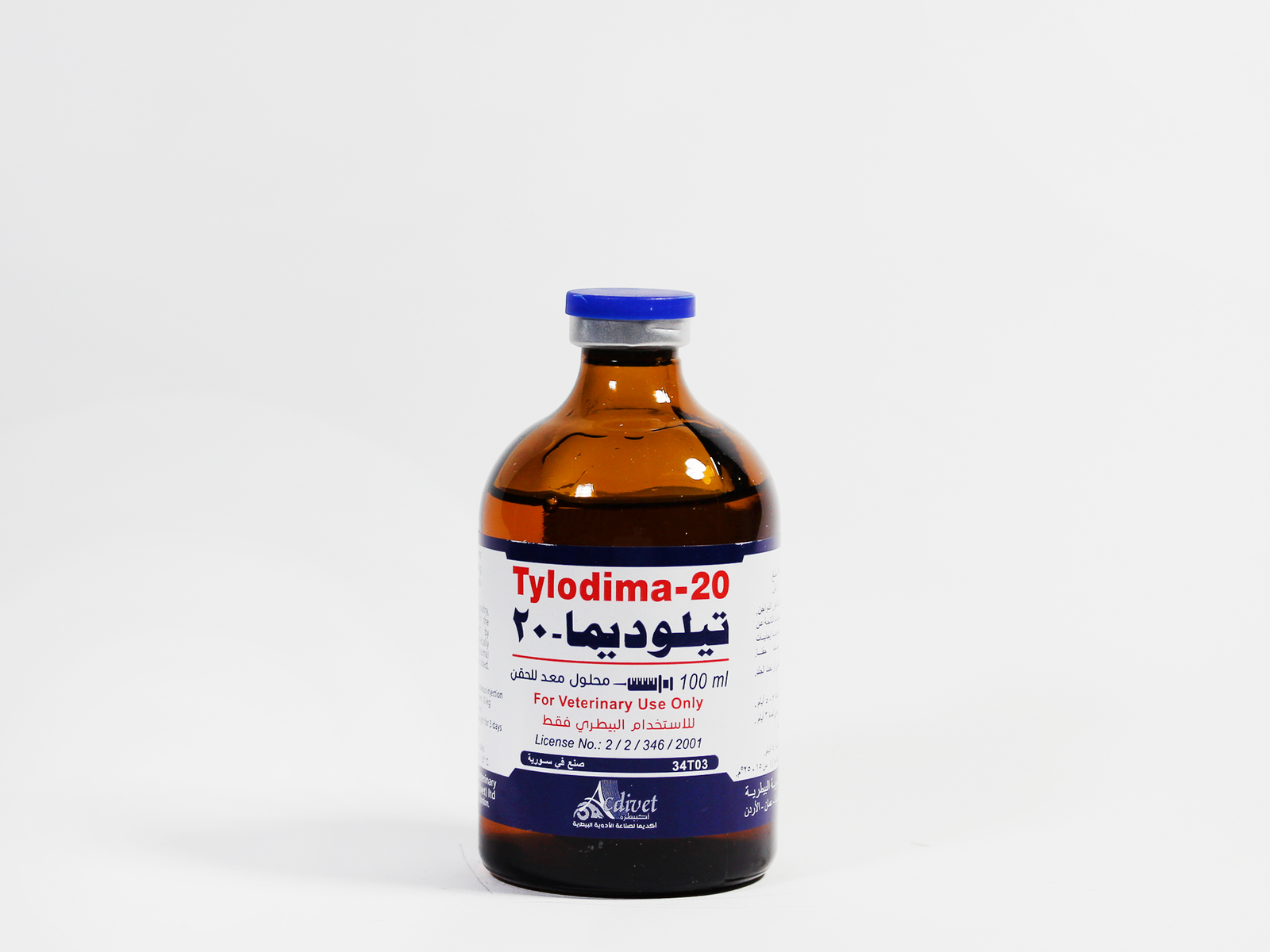
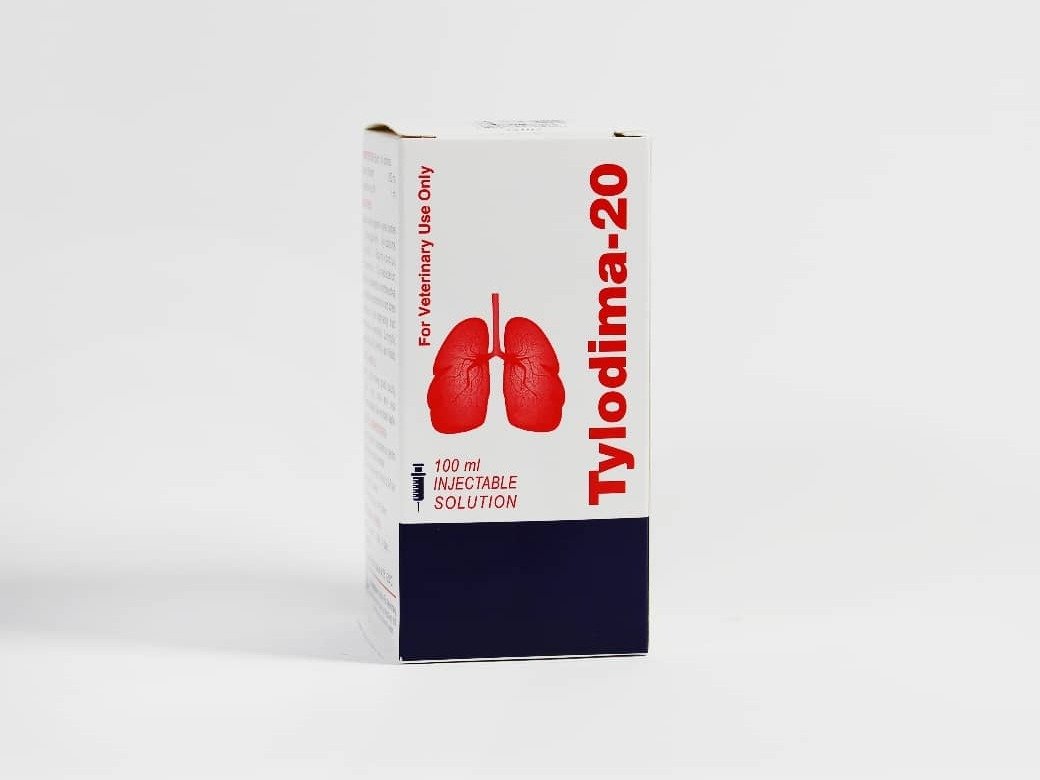
Tylosin Injection / Tylodima-20®
What is Tylosin?
|
Antibiotic
|
Therapeutic Class
|
|
Camel , Cow , Cat , Dog , Goat , Sheep , Pig
|
Target Species
|
|
200mg Tylosin Tartrate
|
Active Ingredients
|
Tylosin Tartrate
Tylosin Injection is an antibiotic drug used to treat various types of infections in both large and small animals such as dogs, cats, cows, camels, goats, sheep, and pigs. It is indicated for the treatment of bovine respiratory complex, metritis, and acute mastitis in cows, and mastitis in sheep and goats.
It is also utilized in the treatment of mycoplasma infections, which are a common cause of respiratory and joint infections in poultry. This expands its application into avian medicine, particularly in commercial poultry production where such infections can significantly impact flock health and productivity.
This drug is also indicated in the treatment of enteritis, pneumonia, erysipelas, infectious arthritis in pigs, and soft tissue infections in small animals.
Tylosin tartrate is classified as a macrolide antibiotic. It has been derived from the fermentation product of Streptomyces fradiae. Tylosin tartrate shows a broad spectrum of activity against gram-positive organisms and a limited range of gram-negative organisms.
One of the key advantages of tylosin tartrate is its high tissue penetration, allowing it to reach effective concentrations in various body tissues and fluids. This makes it particularly useful in treating deep seated infections where other antibiotics might not be as effective. Additionally, tylosin is known for its rapid absorption and distribution in the animal body, leading to quick therapeutic effects.
It is important to note that Tylosin Tartrate Injection is for veterinary purposes only Like other antibiotics, administration should be based on susceptibility testing to avoid the development of antibiotic resistance.
Indications :
Tylosin is effective against a wide range of microorganisms, including Mycoplasma, Leptospira, Streptococci, Actinomyces, Corynebacteria, Clostridia, Bordetella bronchiseptica, and Fusobacterium necrophorum, among others. Therefore, Tylodima is indicated in the treatment of the following conditions:
- Respiratory infections: pneumonia, laryngitis, and bronchitis.
- Leptospirosis.
- Otitis (ear infections).
- Arthritis.
- Mastitis
Dosage and Administration :
- Administer by intramuscular or subcutaneous injection.
- Ruminants and small animals: 0.5 ml per 10 kg body weight every 24 hours for 3–5 consecutive days.
- Poultry and turkeys: 1 ml per 10 kg body weight for 3 consecutive days.
Precautions :
Do NOT use Tylosin Injection for an animal that:
- has a known allergy or hypersensitivity to any of the ingredients.
- is hypersensitive to other macrolide antibiotics such as erythromycin.
- belongs to the following species: equine.
- has severe hepatic or renal impairment.
- is concurrently taking medications known to interact adversely with macrolides (ex. antibiotics, antifungals).
Side Effects :
As with all pharmaceuticals, some unwanted effects can occur from the use of Tylosin Injection.
Some common side effects may include but are not limited to:
- pain at injection site (local irritation)
- gastrointestinal effects (ex. diarrhea)
- pruritus
- decreased appetite
Serious side effects may include:
- allergic reaction (skin rash, fever, facial swelling, or difficulty breathing)
- shock and death in piglets (due to overdosage)
Immediate medical attention is needed in case serious side effects manifest. In the case of an allergic reaction, discontinue the medication at once and seek emergency care.