
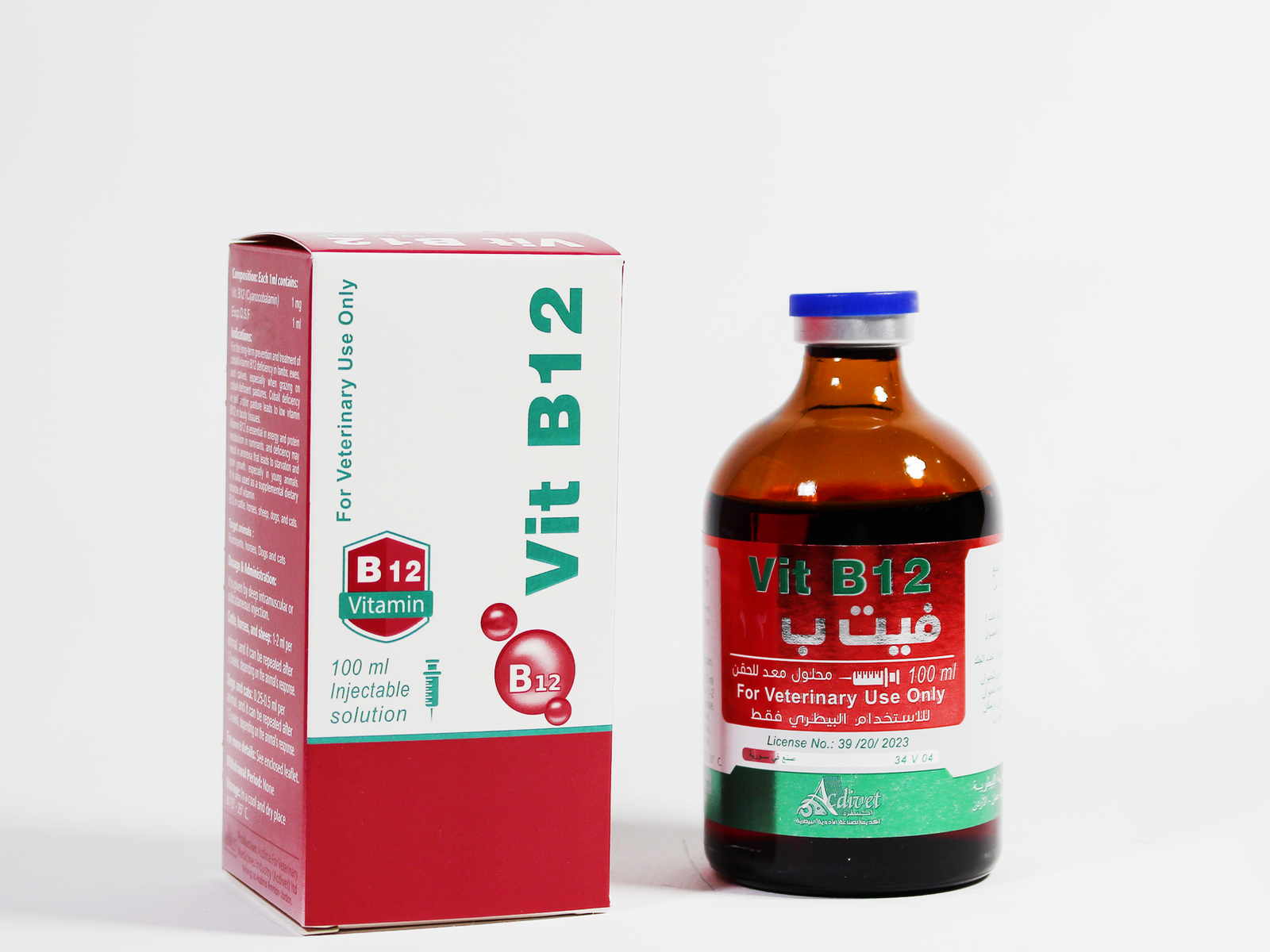
An injectable solution used for the treatment of cobalt and vitamin B12 deficiency in cattle, horses, sheep, dogs, and cats
Vitamin B12 (Cyanocobalamin) Injection / Vit B12®
What is Vitamin B12 (Cyanocobalamin)?
|
Vitamins |
Therapeutic Class |
|
Cattle, Horses, Sheep, Dogs, Cats |
Target Species |
|
100mg Vitamin B12 (Cyanocobalamin) |
Active Ingredients |
Vitamin B12
Vitamin B12 is a water-soluble vitamin containing cobalt. It acts as an important cofactor for many enzymatic reactions in mammals that are essential for normal cell growth, function, and reproduction, nucleic acid synthesis, amino acid metabolism, and red blood cell formation.
Cobalamin is required for the utilization of folic acid. Vitamin B12 deficiency can cause a functional folic acid deficiency. Unlike humans, macrocytic anemia does not appear to be a major feature of cobalamin deficiency in dogs or cats.
Clinical signs associated with cobalamin deficiency in cats may include weight loss, poor hair coat, vomiting, or diarrhea. Increased serum methionine and methylmalonic acid levels, along with decreased blood cystathionine and cysteine levels, may be observed. Homocysteine levels do not appear to be affected.
In dogs, cobalamin deficiency may cause or contribute to anorexia, diarrhea, weight loss, leukopenia, or methylmalonic aciduria.
In ruminants, vitamin B12 is synthesized by rumen microorganisms and requires adequate dietary cobalt for its formation.
Clinical signs observed in cases of cobalamin deficiency associated with cobalt deficiency in cattle and sheep include loss of appetite, lethargy, poor coat or wool quality, reduced milk production, weight loss, or failure to grow.
Indications :
For the prevention and long-term treatment of cobalt and/or vitamin B12 deficiency in lambs, ewes, and calves, especially when grazing on cobalt-deficient pastures. Cobalt deficiency in soil and/or pasture results in reduced vitamin B12 levels in body tissues.
Vitamin B12 is essential for energy and protein metabolism in ruminants. Deficiency may lead to loss of appetite, resulting in starvation and poor growth, particularly in young animals.
It is also used as a supplemental nutritional source of vitamin B12 in cattle, horses, sheep, dogs, and cats.
Dosage and Administration :
Administered by deep intramuscular injection or subcutaneous injection.
- Cattle, horses, and sheep: 1–2 ml per animal; the dose may be repeated after 1–2 weeks depending on the animal’s response.
- Dogs and cats: 0.25–0.5 ml per animal; the dose may be repeated after 1–2 weeks depending on the animal’s response.
Precautions :
Do not use in animals with known hypersensitivity to the active ingredients.
Side Effects :
No specific side effects have been reported