
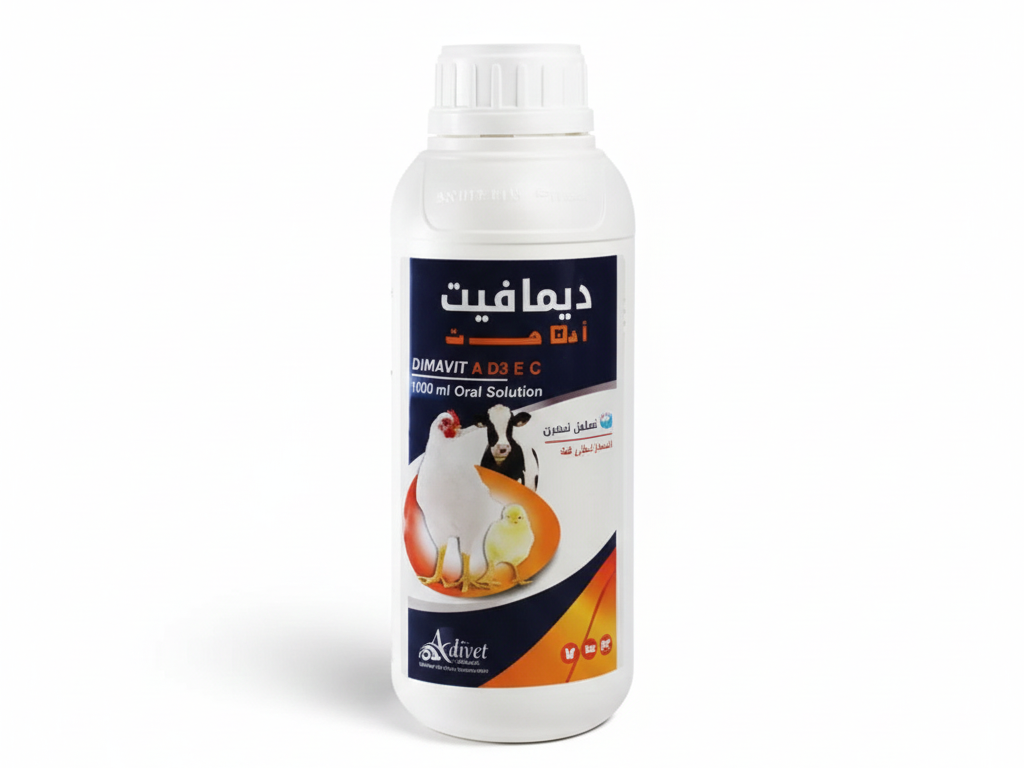
Dimavit (AD3E) Solution contains a combination of three essential vitamins and is administered via drinking water to correct vitamin deficiencies, enhance production efficiency, improve feed conversion, increase body weight, and boost egg production in laying hens .
Vitamin A, Vitamin D3, Vitamin E Oral Solution / Dimavit (AD3E) ®
What are Vitamin A, Vitamin D3, and Vitamin E ?
|
Vitamins |
Therapeutic Class |
|
Poultry, ruminants |
Target Species |
|
Vitamin A Palmitate 40,000 IU + Vitamin D3 (Cholecalciferol) 10,000 IU + Vitamin E (α-Tocopheryl Acetate) 20 mg . |
Active Ingredients |
Vitamin A, Vitamin D3, Vitamin E
contains a combination of three essential vitamins vital for the health and productivity of animals and poultry. These vitamins play a crucial role in maintaining overall health, supporting the immune system, enhancing production, and preventing a range of diseases, particularly respiratory and gastrointestinal infections, while also boosting immunity against viral diseases.
Vitamin E contributes to improved fertility, hatchability, and production, and helps prevent muscular and neurological disorders (such as “crazy chick disease” and white muscle disease). It also acts as a powerful antioxidant.
Vitamin D3 is essential for calcium regulation and skeletal development, helping prevent rickets, calcium deficiency, and issues such as thin-shelled or shell-less eggs in laying hens.
Vitamin A has multiple functions, including maintaining the integrity of epithelial tissues, enhancing natural immunity against microbial invasion, and supporting overall immune function by protecting epithelial and mucosal cells.
Indications :
Dimavit (AD3E) is indicated in the following cases:
- Delayed growth
- Rickets
- Bone softening
- Muscle atrophy
- Disorders of mucous and epithelial membranes
- Abortions
- Premature births
- Stress conditions
- Respiratory diseases
- Reproductive disorders
- During or after antibiotic therapy and recovery periods
- To enhance growth and production rates
- During pregnancy
Dosage and Administration :
Administer orally via drinking water for 2–3 consecutive days.
- Poultry: 100 ml per 200 liters of drinking water
- Sheep and goats: 5 ml per animal
- Cattle, camels, and horses: 20 ml per animal
- Calves and foals: 10 ml per animal
- Small animals: 2–4 ml per animal